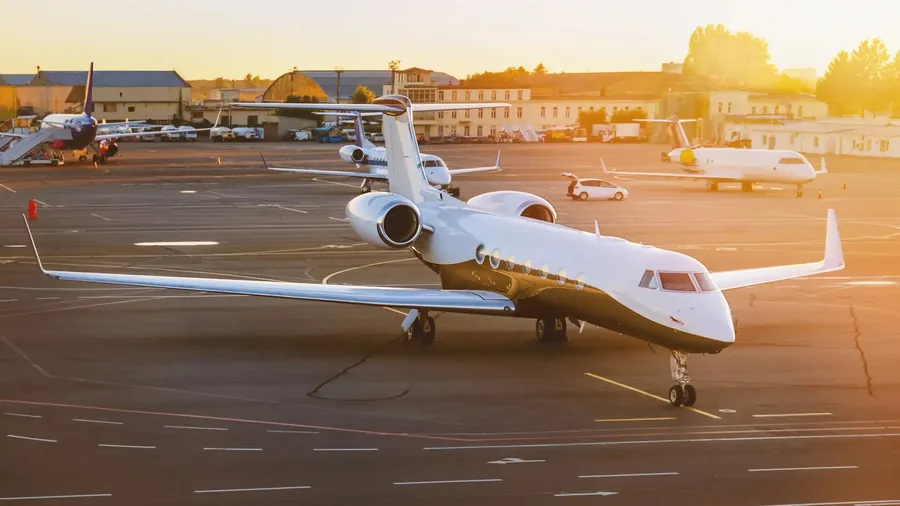
 Private Jets
The runway decides the aircraft
Guests do not fly to the boat. They fly to the nearest runway that will take the aeroplane, and that airport decides the whole day.
To the boat
The week on a yacht starts at an airport. Private Jets looks at the aircraft that get owners and guests to the boat: which class flies which distance, what an hour costs, which airfields sit closest to which anchorage, and how the last forty minutes are done.
Private Jets
Guests do not fly to the boat. They fly to the nearest runway that will take the aeroplane, and that airport decides the whole day.
 Private Jets
Four ways to fly privately, and a single number of hours a year that decides which one is not a mistake.
 Private Jets
Everybody plans the flight. The part that decides whether a guest arrives happy is what happens between the aircraft door and the boat.
The short version
Guests do not fly to the boat; they fly to the nearest runway that takes the aircraft, and then a car, a helicopter or the tender does the rest. Nice takes anything. Cannes-Mandelieu takes light and midsize jets and is twenty minutes closer to the anchorage. Olbia takes everything and is twenty minutes from Porto Cervo. St Barths takes a turboprop and nerve. Knowing the runway is knowing the itinerary.
Aircraft come in classes by range and cabin. A light jet does two hours and six people; a midsize does four hours and eight; a super-midsize crosses the Atlantic with a stop; a large-cabin jet crosses it without one and lands fourteen people in Nice in time for lunch. The hourly cost roughly doubles at each step, and the right answer is the smallest aircraft that does the legs without a stop.
The last forty minutes are what a good charter broker or family office actually arranges: the FBO with the car on the apron, the helicopter to the yacht's helipad or to the marina, the crew waiting with the tender at the quay. Done well, a guest who left London at nine is on the sundeck with a glass at one.
Worth knowing
The deck vote
Use it now
Aircraft Selector
Which aircraft, which airport, and how long from the apron to the passerelle.
Questions people ask
Charter for anyone flying under about 50 hours a year, with a broker who knows the boat's calendar. A jet card, prepaid hours at a fixed rate, for 50 to 150 hours a year with predictable routes. Fractional or whole ownership only above that, and only for owners who like managing an aircraft as well as a yacht.
No, and neither can most helicopters. A certified helideck exists on a few dozen yachts over 80 metres; others have a touch-and-go pad that takes a light helicopter for a minute at a time. Most transfers land at the marina heliport or the airport and finish by car or tender.
Positioning flights an aircraft has to make anyway, sold at 40 to 70 per cent off. They fit a yacht week badly, because the aircraft goes where it needs to go at the time it needs to go, but a flexible guest flying Nice to London on a Sunday will find them.
Nice, Olbia, Palma, Ibiza, Naples, Athens, Dubrovnik, Tivat with limits, St Maarten, Antigua, Nassau, Palm Beach and Fort Lauderdale. Cannes-Mandelieu, Mykonos and St Barths limit the size, and a good broker checks the runway before the guests choose the aircraft.
The Log
One entry a week: the new long read, one boat worth studying, one number worth knowing. No advertising, no tracking, one click to leave.