 Catamarans
The beam problem
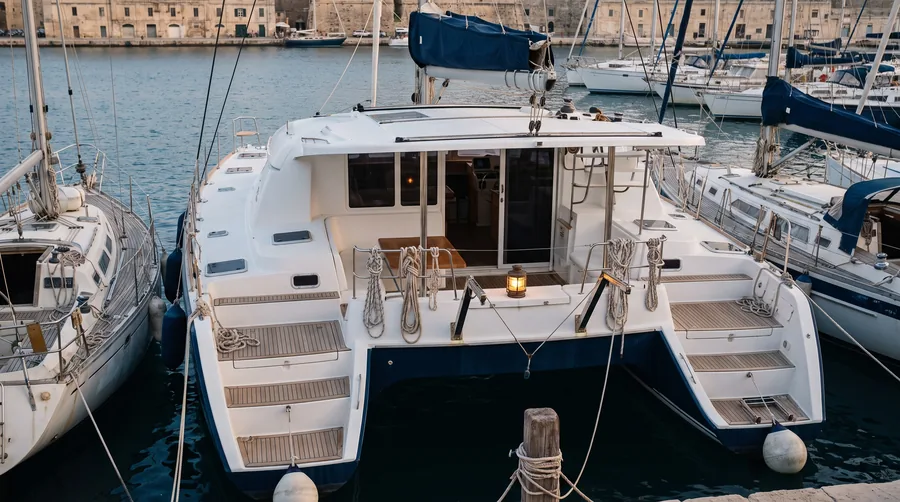
A catamaran gives you the deck of a boat ten metres longer. The harbour charges you as if she were two boats, when it will take her at all.
Two hulls
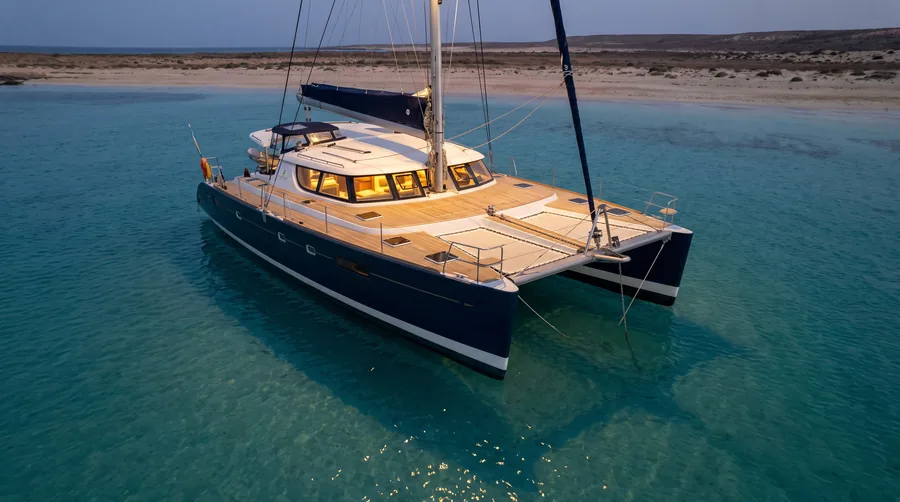
The catamaran was the boat the yachting establishment did not want and the charter market chose anyway. Catamarans looks at why: space, level decks, a metre and a half of draft, and the one cost that doubles when the beam does.
Catamarans
A catamaran gives you the deck of a boat ten metres longer. The harbour charges you as if she were two boats, when it will take her at all.
 Catamarans
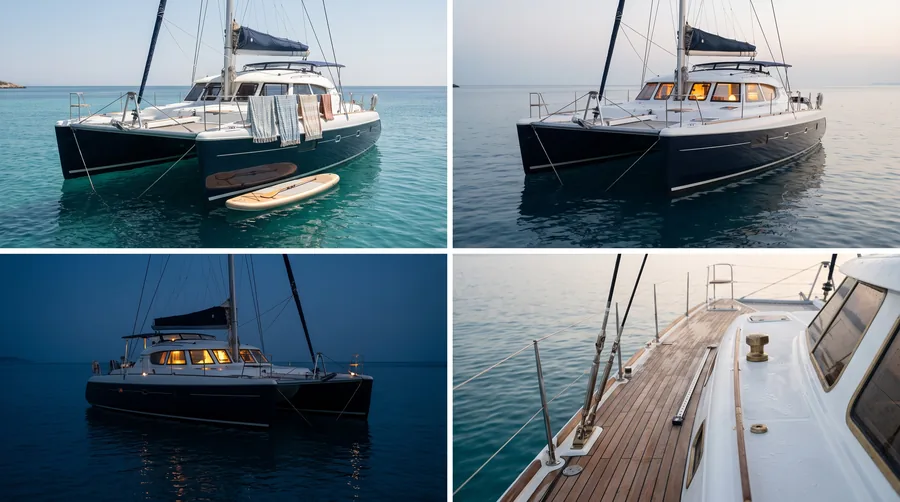
The catamaran became the default family charter boat in a decade, and the reasons have almost nothing to do with sailing.
 Catamarans
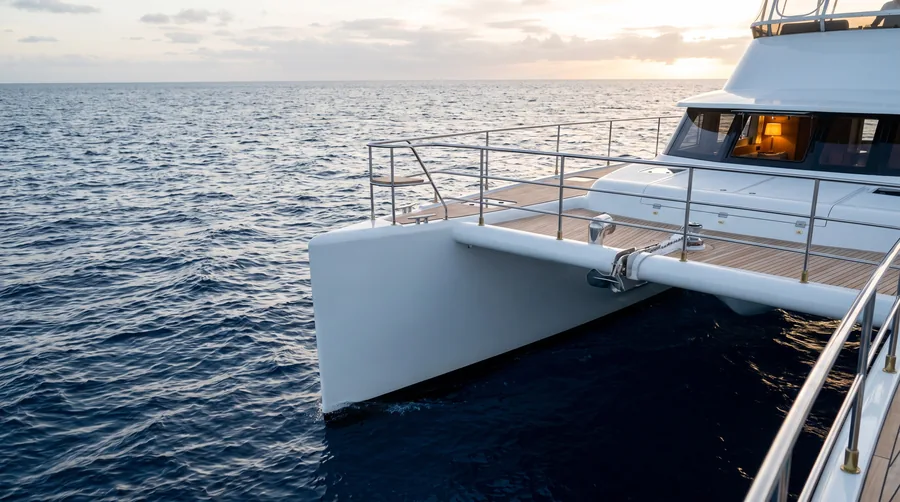
Take the rig off a catamaran and you have a boat that carries more, burns less and berths worse than a motor yacht of the same length. Which of those matters is the whole decision.
The short version
A 24 metre catamaran has the deck area of a 35 metre monohull, sits level at anchor and under sail, floats in a metre and a half of water and puts every cabin at deck level with a view. For a family week in the Grenadines or the Cyclades, nothing else does the job as well, and the charter fleets noticed a decade before the owners did.
The price is paid at the dock. Beam is what marinas charge for, so a 24 metre catamaran of 11 metres beam pays for a berth the width of two monohulls, and many of the best harbours have no berth for her at all. The other cost is motion in a seaway: two hulls do not heel, but they pitch and slam, and a catamaran crossing an ocean is a different experience from a catamaran at anchor.
The modern market splits into sailing cats for owners who sail, power cats for owners who want the volume without the rig, and the new class of 30 to 40 metre catamaran superyachts that are really small ships with a wide beach.
Worth knowing
The deck vote
Use it now
Passage Planner
Distance, speed, fuel and the watch plan for twenty classic legs.
Questions people ask
If you will sail, the sailing cat, which motors well anyway. If you will not, the power cat gives the same volume without the rig, the rigging bill or the crew who can sail, and cruises at 12 to 18 knots on far less fuel than a monohull. The mistake is a sailing cat bought for the look and never sailed.
Better than most monohulls in the 15 to 25 metre range, because the charter fleets buy them used and there are never enough. Above 30 metres the market is thin, the buyer pool small, and the resale time long.
The bridge deck between the hulls meets the top of a wave when the sea is short and steep. Higher bridge deck clearance, about 5 per cent of the length or more, and a longer waterline reduce it. Nothing removes it entirely, and an owner who sails to windward often should sail a monohull.
Most of the old Riviera ports, most of the Italian islands and much of Greece have berths cut for monohull beams. Marinas built after 2010 in Croatia, Turkey, the Balearics and the Caribbean usually have a few wide berths. Ask before you commit to a home port.
The Log
One entry a week: the new long read, one boat worth studying, one number worth knowing. No advertising, no tracking, one click to leave.