 Crew Services
The captain is the purchase
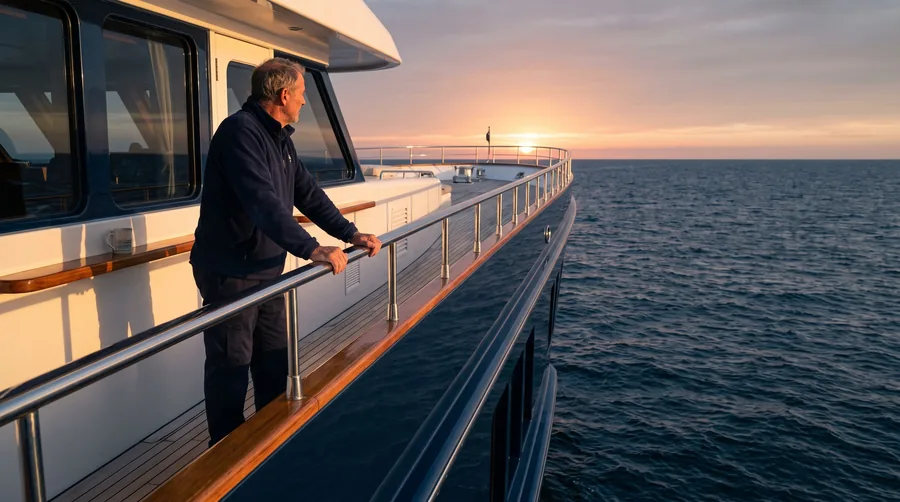
An owner spends a year choosing a boat and an afternoon choosing the person who will decide what that boat is like to own.
The people on board
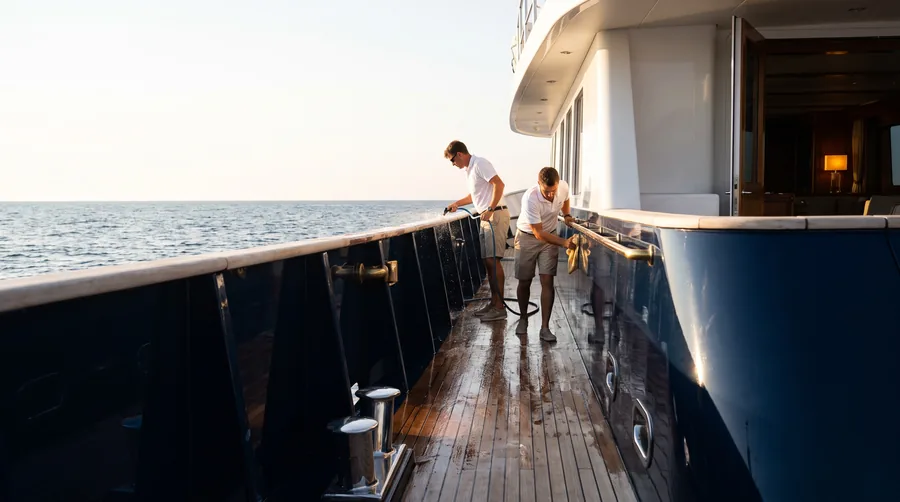
A yacht is a crew with a hull around it. Crew Services looks at who is on board a 60 metre boat and why, what they earn, how rotation works, and why the single most important purchase an owner makes is the captain.
Crew Services
An owner spends a year choosing a boat and an afternoon choosing the person who will decide what that boat is like to own.
 Crew Services
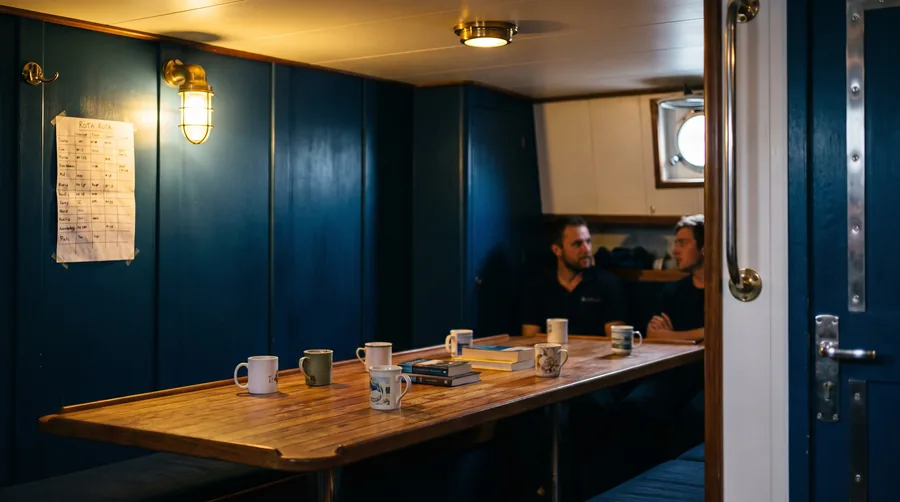
Salaries are the part everybody quotes. Flights, insurance, training, uniforms and food add a quarter again, and rotation doubles what it touches.
 Crew Services
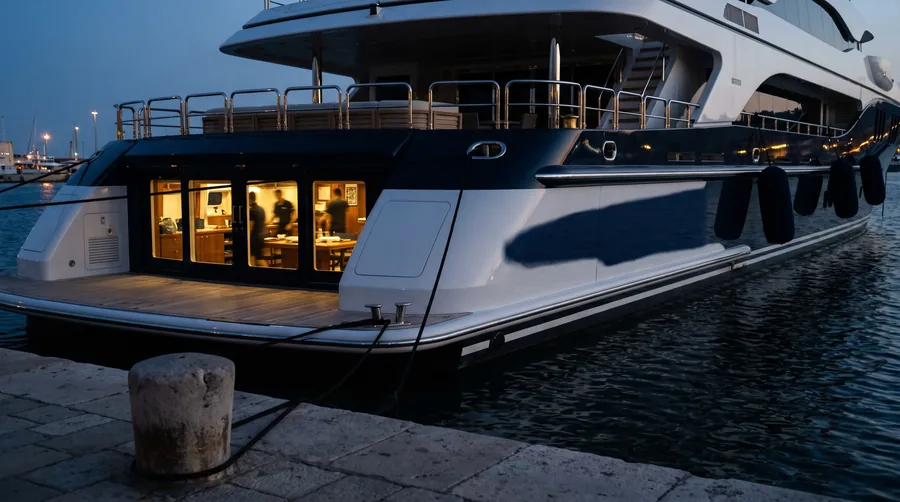
The owner, the captain, or somebody at home. In that order, and the first one is the only one an owner can do anything about.
The short version
Crew size is set by the boat, not by the owner's preference. A 50 metre motor yacht runs safely with 10 to 13 crew: a captain, a chief officer, a bosun and two or three deckhands on the outside; a chief engineer and a second engineer below; a chef and sometimes a sous chef in the galley; a chief stewardess and two or three stewardesses inside. Cut the number and the boat gets dirty, the guests get slow service and the crew leave.
Crew are paid monthly, mostly tax-free depending on their residence, with flights home, medical insurance, uniforms, food and training on top. Rotation, where two crew share one job in alternation, has spread from engineers to captains and now to whole departments on boats over 70 metres, and it roughly doubles the payroll for the positions it covers.
The captain is the decision. A good one keeps the crew, keeps the boat out of the yard, keeps the owner out of court and keeps the season on time. A bad one costs more than the boat's depreciation, and the owner rarely finds out until the second year.
Worth knowing
The deck vote
Use it now
Crew Planner
Who is on board, what they earn, and what rotation does to the payroll.
Questions people ask
Through crew agencies in Antibes, Palma, Fort Lauderdale and online, through the captain's own network, and by word of mouth on the dock. The captain hires the heads of department and they hire their teams. An owner who hires crew directly, below the captain, has taken the captain's authority away in front of the crew.
STCW basic safety training and an ENG1 medical for everyone. Officers hold certificates of competency matched to the boat's tonnage, engineers the same, and the chef increasingly a food hygiene certificate. Under the Maritime Labour Convention every crew member has a contract, a rest-hour record and a right to be repatriated.
The owner, the captain, or a partner ashore, in that order. Yachts with a settled owner, a fair captain and a rotation policy keep crew for years. Boats with a difficult owner turn over a whole crew every season, and the boat shows it.
On boats over 70 metres it has become the price of keeping good officers, and the same is true of engineers on any boat that runs hard. Doubling a captain's payroll to keep a captain for ten years is cheap against finding a new one every eighteen months.
The Log
One entry a week: the new long read, one boat worth studying, one number worth knowing. No advertising, no tracking, one click to leave.