The shortage
The berth is the hard part
Anybody with the money can buy sixty metres of yacht. Almost nobody can find her a home on the Western Mediterranean coast in July.
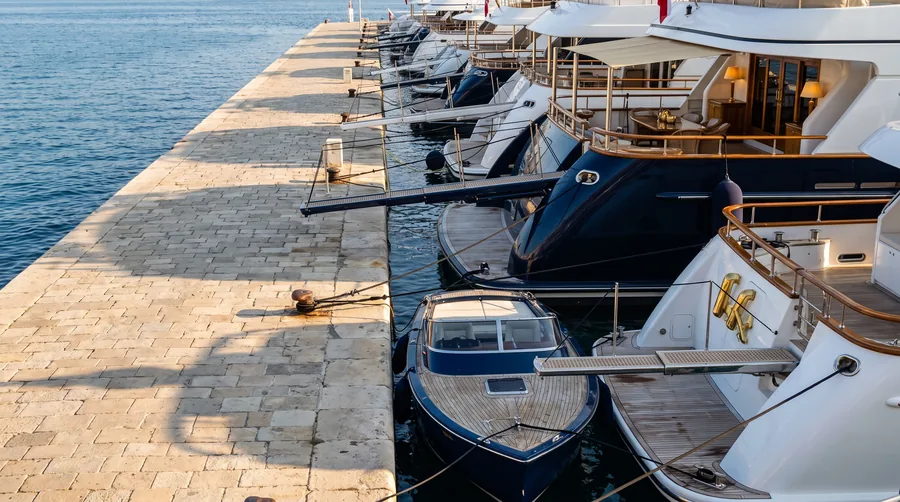
There is a moment in most first ownerships when the new owner asks the captain where the boat will be in August, and the captain explains that the answer was decided last November by somebody in an office in Antibes, and that the price of being late is either a berth an hour from where the guests want to be or a season spent at anchor.
The supply of berths for yachts over forty metres between Barcelona and Genoa is small, mostly under long lease, and priced like a scarce asset because that is what it is. Everything else about running a large yacht can be bought on demand. The berth cannot.
Why there are so few
A berth for a sixty metre yacht is not three berths for twenty metre yachts. It needs depth at the quay, a quay wall that can take the loads, lazy lines rated for the pull, power at three hundred and eighty volts in quantities that would light a village, and a turning basin. Most Mediterranean harbours are historic ports with a marina added, and the geometry does not stretch.
The result is a market where the long term leases were signed decades ago, where transfers happen privately, and where the nightly rate in the famous harbours in August has become one of the few prices in yachting that genuinely shocks new owners.
The three kinds of berth an owner needs
The home berth
Where the boat lives, refits, stores her spares and keeps her crew. It should be sheltered, deep, secure, near a shipyard and near an airport, and it does not need to be beautiful. Antibes, La Ciotat, Barcelona, Palma, Genoa and Viareggio carry most of the European fleet for this reason, and the crew who live there in winter have somewhere to buy a coffee at seven in the morning.
The season berth
Where she sits between guest trips in the summer: close to the cruising ground, easy to provision, with a fuel dock and a taxi rank. Owners underrate this berth and captains do not, because it is where half the year's work happens.
The night
Monaco during the Grand Prix, Porto Cervo in August, Saint Tropez for a birthday. This is the berth that appears in photographs and costs what it costs. It is booked months ahead, usually through an agent, and it is a purchase rather than a logistics decision.
What a marina charges beyond the berth
The headline rate is a metre price. On top of it come water, electricity by the reading or by the day, waste and black water removal, security, sometimes a tourist tax per person per night, and in a few ports a charge for the passerelle position. Budget fifteen to twenty five per cent above the headline, and more for a boat running air conditioning alongside in August.
Use it now
Berth Calculator
What a berth costs by the night and by the season, in twenty four harbours.
Buying a berth
In several Mediterranean countries a berth can be bought as a long concession, typically twenty to forty years, with an annual service charge. The price for fifty metres runs into seven figures and the market is illiquid. Owners buy them to stop asking, not to make money, and the ones who are happiest are those who bought where the boat actually wants to be rather than where the address is best.
The alternative, and the one most good captains recommend, is a long term commercial agreement with a working marina and a relationship with two agents who can find a night anywhere at short notice. It costs less and it flexes.