Condition
The survey that saves a million
A condition survey and a haul-out on a fifty metre yacht costs the price of a small car. Skipping it is the most expensive decision in yachting.
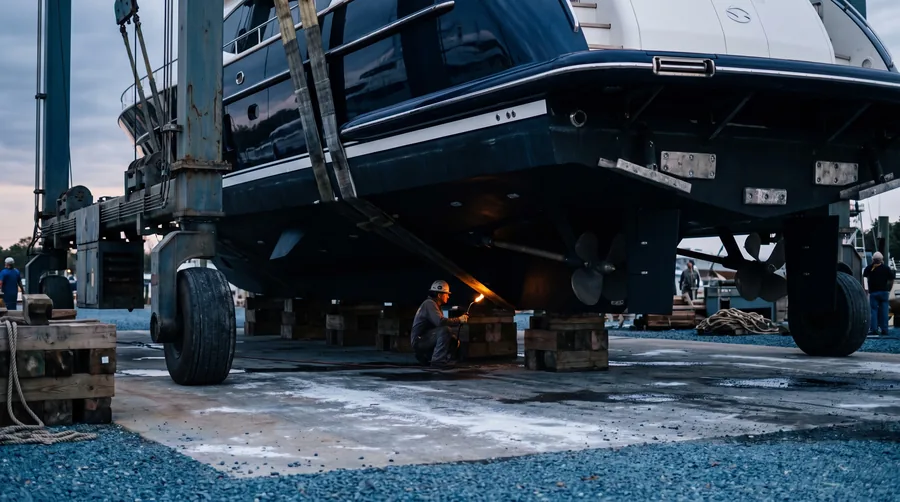
Every experienced buyer has the same story from their first boat, and the story always ends the same way: the survey found something, the price moved, and the thing the survey found would have cost four times the saving to discover in the second season.
What a full survey covers
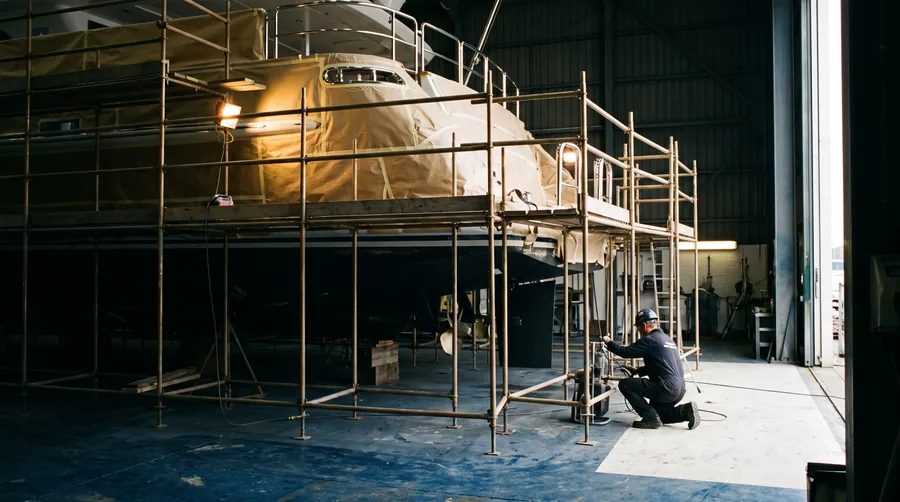
A proper pre-purchase survey on a large yacht is three or four people over several days with the boat out of the water. A hull and structures surveyor takes ultrasonic thickness readings, examines the coating, the anodes, the shafts, the seals, the rudders and the sea chests. A machinery surveyor runs the engines and generators, takes oil samples for analysis, checks the hours against the logs and looks hard at the stabilisers. An electrical survey follows, and on a boat with class, a review of the certificates and outstanding conditions.
Then a sea trial: manoeuvring, full power, noise and vibration, the systems under load and the crew watched while they work, which tells an experienced surveyor as much as any instrument.
What surveys actually find
- Osmosis and coating failure below the waterline, usually cosmetic, occasionally structural.
- Stabiliser seals and shaft seals at the end of their life, which is a haul-out to fix.
- Engine hours that do not match the log, or oil analysis showing metal that should not be there.
- Corrosion where dissimilar metals meet, particularly around sea chests and in the bilges.
- Tank issues, especially black water and fuel tanks on boats over fifteen years old.
- Fire systems, liferafts and safety equipment out of certification, which is cheap to fix and tells you how the boat was run.
Choosing the surveyor
Independent of the brokers on both sides, experienced on that type and that size of boat, and willing to say in writing that the buyer should walk away. The last of these is the test. A surveyor whose reports are always mild is popular with brokers and useless to buyers.
Ask for two anonymised reports from similar boats before appointing. A good report is specific, photographed, ranked by urgency and priced. A bad one is a checklist with the word satisfactory in every box.
The report you want is the one that tells you what this boat will cost in the next three years, not the one that tells you she floats.
A surveyor with thirty years in the Mediterranean fleetThe one survey nobody books
An interior and systems survey by somebody who runs yachts: a captain or a manager who walks the boat as an operator rather than as an engineer. They find the things that make a crew miserable and an owner's week difficult: the galley with no landing space, the crew mess that seats six of eleven, the tender that cannot be launched in a swell, the air conditioning that cannot hold the master cabin in August.
It costs a few thousand and it is the survey that decides whether you enjoy the boat.
Use it now
Purchase Planner
What buying her costs beyond the price, and the paperwork that decides where she can go.