Management
The yacht as a company
Above forty metres a yacht has a payroll, a compliance regime, an audit and a board meeting. Somebody has to run it, and it is not the owner.
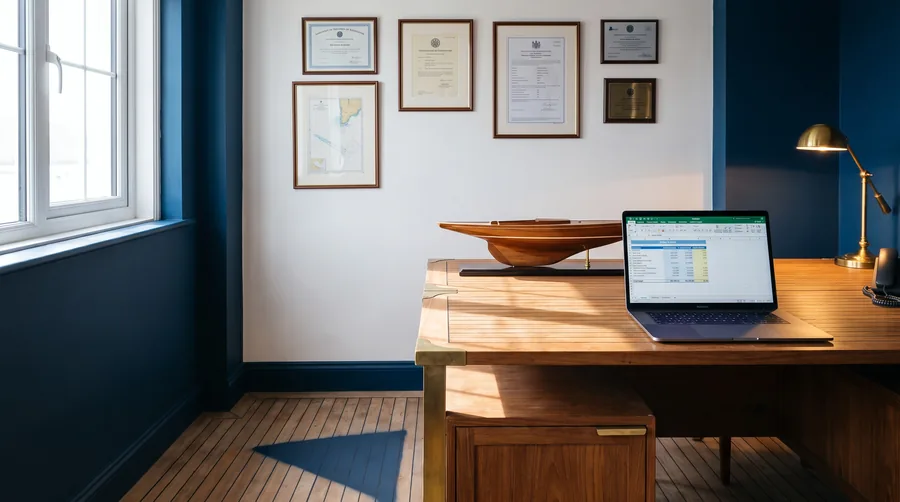
The pleasant fiction of yacht ownership is that you buy a boat. What you buy above about forty metres is a small business with between ten and twenty employees, assets in several jurisdictions, a regulated safety regime, a maintenance capital programme and a customer, who is you. Management is the decision about who runs that business.
What a management contract covers
- The safety management system and the ISM documentation, required above 500 gross tonnes.
- Flag and class: certificates, surveys, renewals, and the conditions that have to be closed out.
- Crew: contracts, payroll, medicals, certification, rest hour records, repatriation, insurance.
- Accounts: budgets, monthly reporting, supplier payments and an audit trail an owner can read.
- Technical: supervision of yard periods, tendering the work, and an engineer ashore who answers at night.
- Insurance placement, claims, and the twenty four hour emergency response.
The core compliance package for a fifty to sixty metre boat runs to a few thousand euros a month. Full management with accounts, crew and technical supervision costs several times that and is still small against what it prevents.
What it is actually worth
Three things that are hard to price. Somebody with forty yard periods behind them sitting opposite the yard when the variation orders arrive. Continuity when the captain leaves, so the boat's history does not leave with them. And a structure in which the owner is not personally the employer of eighteen seafarers under a convention they have never read.
The manager earns the fee in the first yard period. After that they earn it in the months when nothing happens, which is harder to see.
An owner's representative, on renewing a management contractThe argument for running it yourself
Below five hundred gross tonnes, with a settled captain and a good accountant, plenty of boats are run without a manager and run well. The captain holds the relationships, the owner's family office handles the money, and the arrangement works exactly as long as the captain stays.
The failure mode is specific and common: the captain leaves, and with them go the supplier relationships, the maintenance history that was in their head, the crew's loyalty and the knowledge of which of the yard's promises were real. An owner who runs the boat directly should insist on a documented system for precisely that day.
How to choose one
By the people, not the brochure. Ask who specifically will be on your account, how many boats they handle each, and what happens when that person is on holiday. Ask for two owner references of boats the same size. Ask how they are paid by suppliers, because a manager who takes a commission from the yard is not sitting on your side of the table.
Use it now
Charter Yield
What a charter programme really nets, and how much of the year it covers.