The comparison
Power catamaran or motor yacht
Take the rig off a catamaran and you have a boat that carries more, burns less and berths worse than a motor yacht of the same length. Which of those matters is the whole decision.
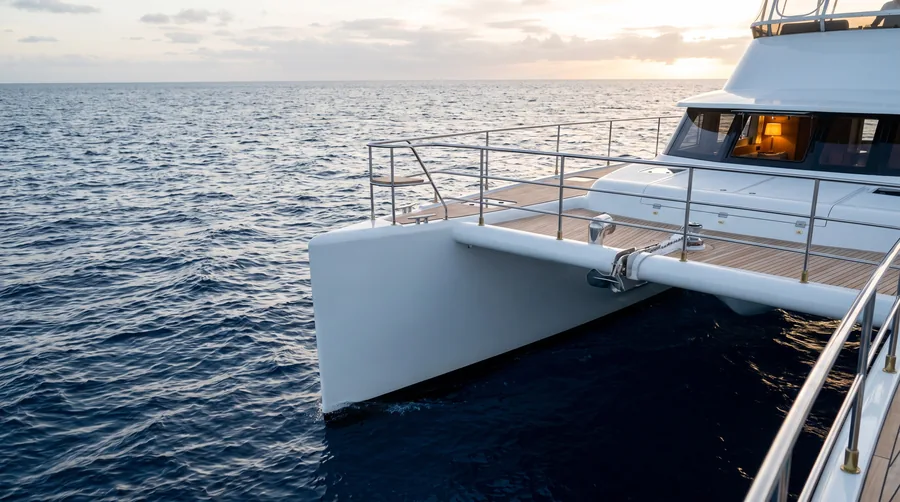
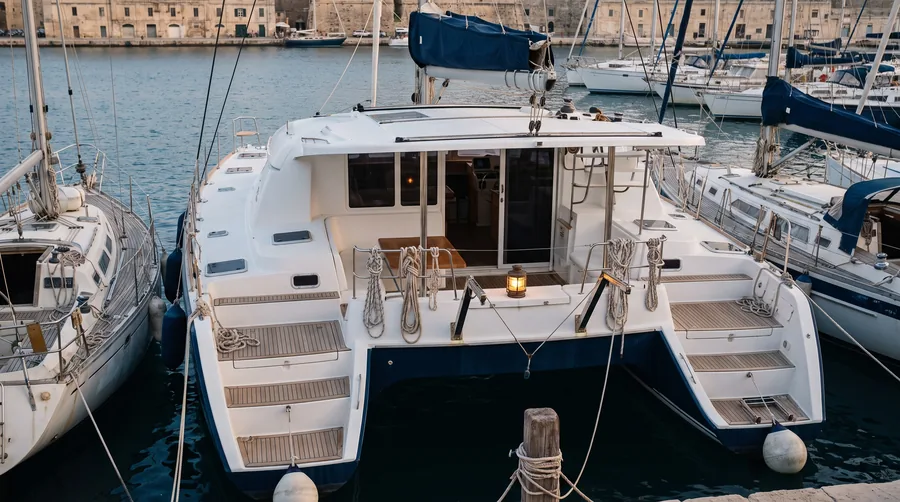
The power catamaran is the fastest growing part of the market nobody argues about, because the people who love them and the people who dismiss them are looking at different weeks. The boat is a straightforward proposition: two slender hulls, no rig, a bridge deck of enormous volume, and a fuel curve that embarrasses a monohull of the same length.
Where the numbers fall
Two slender hulls push less water than one fat one. At displacement speeds, ten to fourteen knots, a power catamaran of twenty four metres burns something close to half what a monohull motor yacht of the same length burns, and does it while carrying more people in more space. She also has no heel, no roll at anchor and shallow draft.
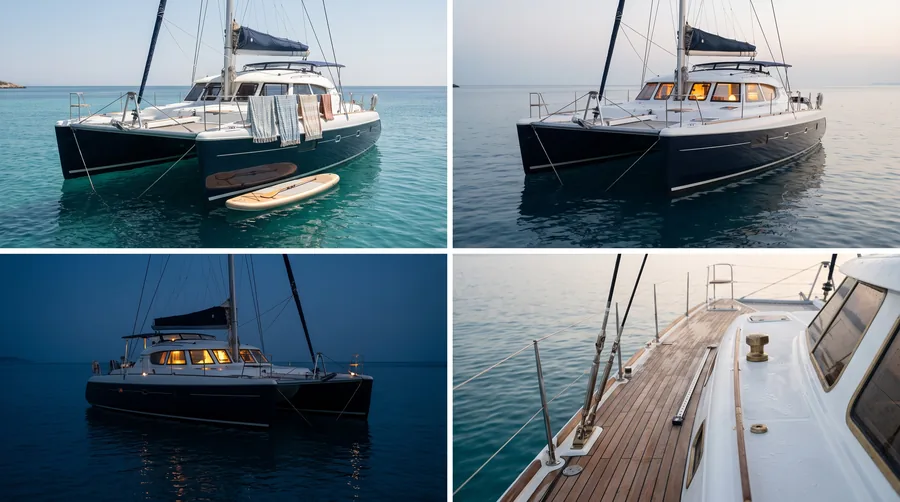
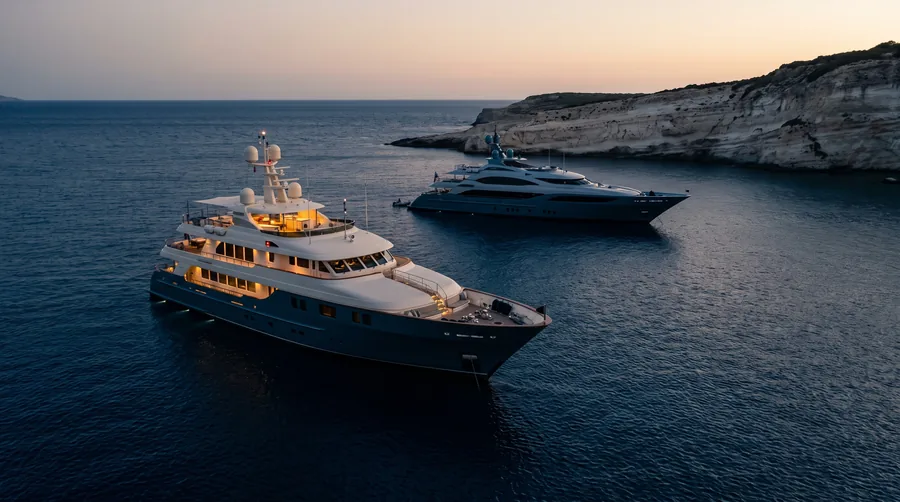
Twenty four metres, the same week, three ways
The comparison flips above about eighteen knots, where the monohull planing yacht is in its element and the catamaran is fighting physics. Power cats are boats for going far at a modest speed, not for going fast.
What a motor yacht still does better
She berths anywhere, she is easier to sell, she looks like what most people expect a yacht to look like, and above about thirty metres she has a fleet of shipyards and captains and surveyors who know her intimately. The catamaran above thirty metres is still a specialist proposition with a small pool of buyers and a smaller pool of harbours.
She also handles a head sea better. The slamming question on a power cat is the same as on a sailing cat, and a boat crossing the Gulf of Lion in a mistral will remind everybody aboard which hull form they chose.
The honest recommendation
For a family or an owner who cruises long distances at modest speed, anchors more than they berth, and values level decks and shallow water, the power catamaran is the better boat and the market has not fully priced that in yet. For an owner whose season runs between famous harbours on a coast where berths are scarce, it is the wrong boat however good the fuel figure.
The deciding question is not which is better. It is how many nights of the year the boat will be tied to something.
Use it now
Passage Planner
Distance, speed, fuel and the watch plan for twenty classic legs.