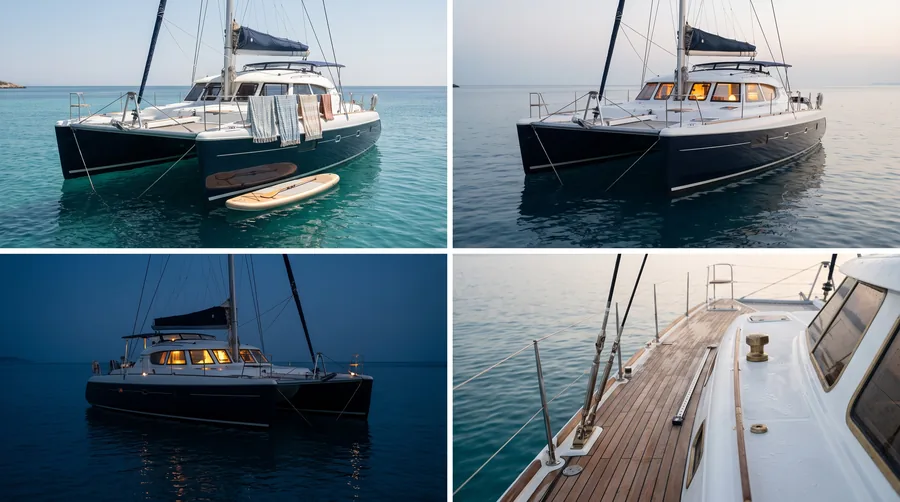
Two hulls, one berth
The beam problem
A catamaran gives you the deck of a boat ten metres longer. The harbour charges you as if she were two boats, when it will take her at all.
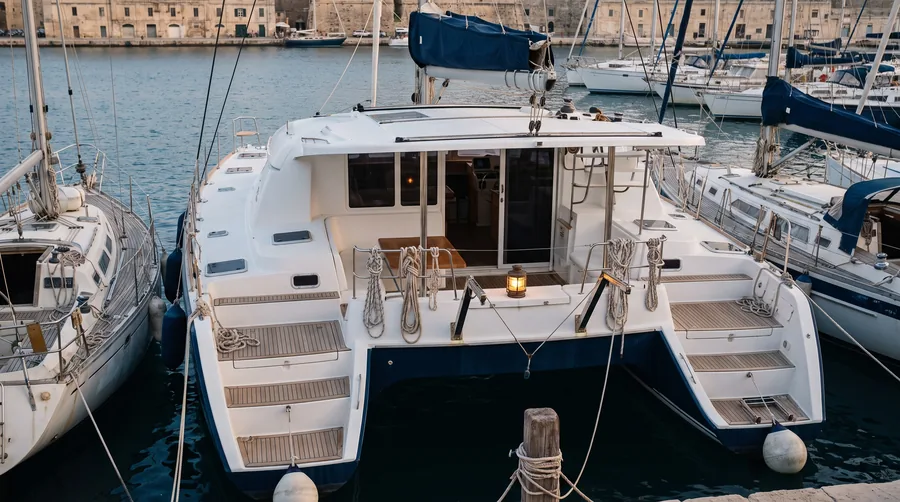
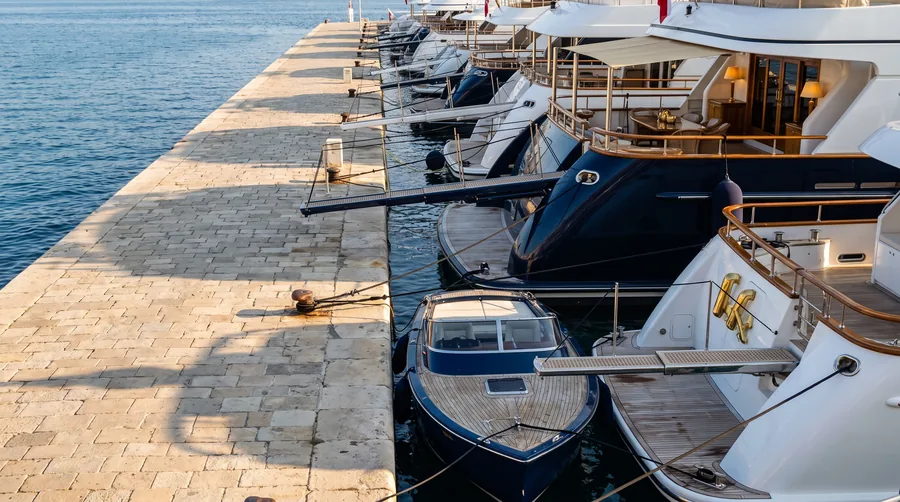
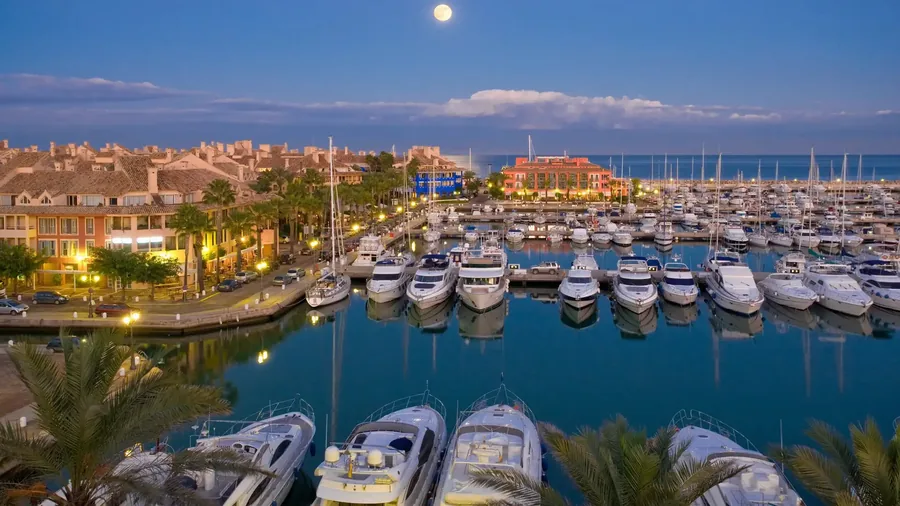
Every argument for the catamaran is made at anchor and every argument against it is made at the dock. At anchor she is level, shallow, vast for her length and impossible to argue with. At the dock she is eleven metres wide in a harbour whose berths were cut for boats of five, and the harbourmaster either has one wide berth or he does not.
What beam buys
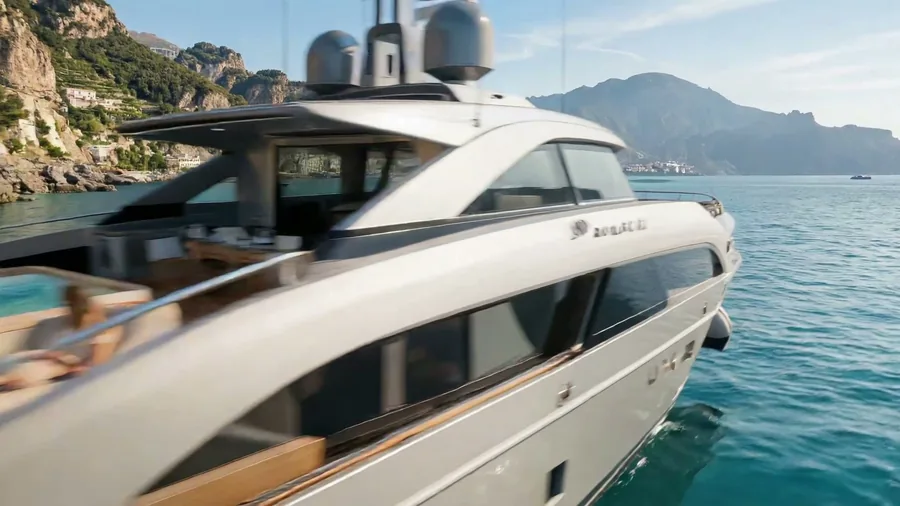
A twenty four metre sailing catamaran has roughly the deck area of a thirty five metre monohull. The cabins sit at deck level in the hulls with windows at eye height rather than portholes below the waterline. The saloon and the cockpit are on one level and open into each other, which is why families with small children and guests who dislike stairs prefer them without being able to say why.
She also floats in a metre and a half to two metres of water. That is the sentence that sells catamarans in the Bahamas, the Grenadines, the Cyclades and along the Turkish coast, because it changes which anchorages exist. A monohull of the same length anchors four hundred metres off the beach in four metres of water; the catamaran is in two, inside her, and the dinghy ride is thirty seconds.
What beam costs
Marinas charge for the rectangle a boat occupies, and most price a multihull at one and a half to two times the equivalent monohull length, when a berth exists. In the classic Mediterranean ports, many built into harbours that are four hundred years old, it often does not. A catamaran owner plans a season around which harbours can physically take the boat, which is a constraint monohull owners never think about.
The second cost is resale in the larger sizes. Between fifteen and twenty five metres the charter fleets absorb everything, and values hold well. Above thirty metres the buyer pool is small, the berths are scarce and a boat can sit on the market for two years.
The motion question
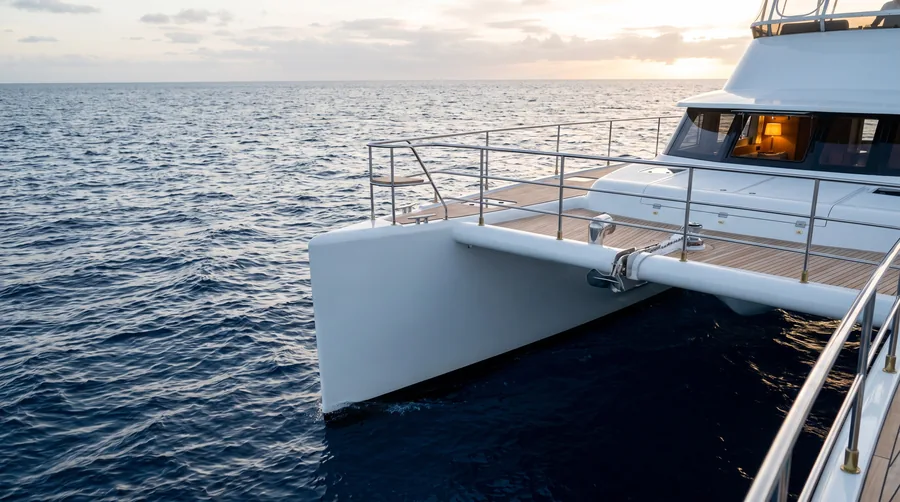
A catamaran does not heel and does not roll at anchor, which are the two things that make guests unhappy. In a short steep sea on the nose she does something else: the bridge deck between the hulls meets the top of a wave and the whole boat shudders. It is called slamming, it is noisy below, and it is a design question rather than a flaw.
Bridge deck clearance of about five per cent of the length, a fine entry and weight kept out of the ends reduce it. Boats designed for charter volume rather than for passages have less of all three. An owner who will sail to windward for days should look hard at the clearance figure and at the shape of the underside of the nacelle, and ideally at the boat in a seaway.
Use it now
Berth Calculator
What a berth costs by the night and by the season, in twenty four harbours.