Reading a yacht
The length that lies
Two boats of fifty metres can differ by half in the only measurement that decides how the week feels. It is not on the first page of the brochure.
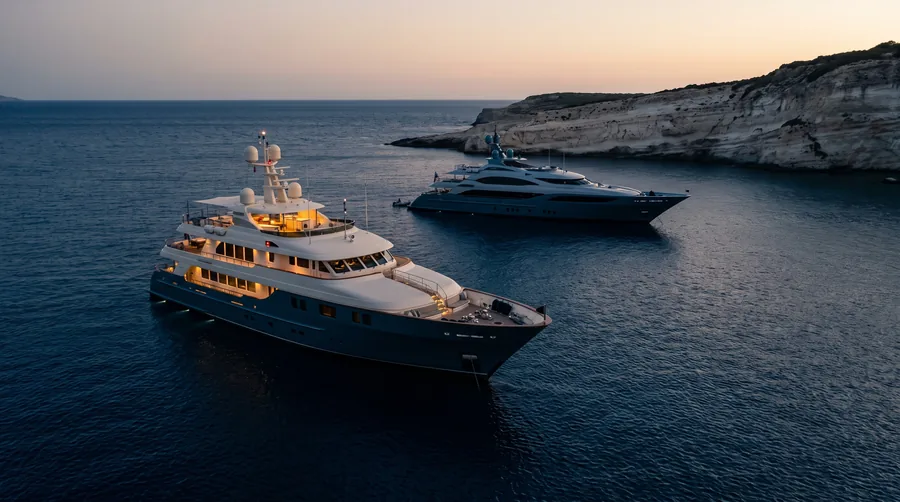
Every listing leads with length overall, because length is what the eye counts on the dock and what the owner says at dinner. It is also the measurement that tells you least about a boat. Put a fifty metre displacement motor yacht built in the Netherlands next to a fifty metre planing yacht built for speed and you have two vessels with the same headline and almost nothing else in common: one carries five hundred tonnes of volume, thirteen crew and a beach club, the other carries two hundred and eighty, nine crew and a garage.
The number that separates them is gross tonnage, and it is not a weight. Gross tonnage measures enclosed volume by a formula that has been arguing with itself since the nineteenth century, and on a yacht it is the closest thing to an honest description of how much boat there is. Cabins, crew mess, machinery space, storage, the height of the decks and the fullness of the hull all land in it. Length does not.
Why volume decides the week
Guests experience volume, not length. A full beam owner's suite needs beam and freeboard. A beach club that opens on three sides needs a transom tall enough to have a room behind it. A crew of thirteen needs cabins, a mess and a laundry that are not in the guest sightline, and on a boat with too little volume they end up sharing space with the guests, which is exactly the failure everybody notices and nobody can name.
The rule of thumb on the brokerage market is crude and useful: below about seven gross tonnes per metre of length, the boat is fast or old or both. Between seven and ten she is a normal modern motor yacht. Above ten she is what people mean when they say the word superyacht, and above twelve you are looking at a small ship with a yacht's paint.
The 500 gross tonne cliff
There is one number in yachting that behaves like a cliff rather than a slope. At 500 gross tonnes the boat crosses into a different regulatory world: a full safety management system under the ISM Code, a higher standard of certification for the officers, more demanding survey and, in practice, a management company ashore. Yards know this, which is why an entire generation of yachts between 45 and 55 metres was designed to measure 499.
A 499 GT boat and a 520 GT boat of the same length feel almost identical in the saloon and cost visibly different amounts to run. Neither is the wrong answer. The wrong answer is discovering the cliff after the deposit.
Length is what you tell people. Volume is what you live in. Tonnage is what you pay for.
A captain of twenty seasons, on being asked what to look at firstWhat to read instead of the headline
A general arrangement plan, the drawing of every deck laid flat, tells you in ninety seconds what a week aboard will be like. Look for the crew route: can a stewardess reach the owner's deck without crossing the saloon? Look for the guest cabins: are they all on one deck, and do they all have a window that opens, or are two of them windowless boxes the broker calls flexible? Look at the beach club: is it a room or a hatch?
Then look at what the plan does not show. The tender garage exists on the drawing; the question is whether the tender in it is big enough to take eight people to lunch in a chop. The helipad exists; the question is whether it is certified for landing or only for touch and go. The range exists; the question is at what speed.
The three questions that settle it
Strip away the brochure and a serious buyer is asking three things. How many people will actually be on board on a normal week, including the crew who make it work? How far from a shipyard is the boat going to spend her life? And how much of the year will she move?
A boat for eight guests who stay within sight of the Riviera and move twice a week is a completely different design from a boat for twelve who want the Aeolian Islands in June and the Grenadines in January. The first can be short, beamy and comfortable. The second needs range, a shallow enough draft to get into an anchorage, tankage, spares and a crew who can fix things a long way from the yard.
Use it now
Running Cost Model
What a yacht of a given length actually costs in a year, line by line.
None of this makes a smaller boat a worse boat. Some of the best weeks on the water happen on thirty metres with six people aboard and a captain who knows every bay on the coast. It makes the headline number a poor way to choose, and the brochure is written by people who know that.